FOUNDATIONAL THESIS
For decades, corporate dogma has preached a singular gospel: delight the customer at every turn.
Companies have spent billions training representatives to go above and beyond, assuming that blowing minds equates to building lasting brand evangelists.
Yet, churn rates remain stubborn and customer dissatisfaction continues to rise despite these heroic investments.
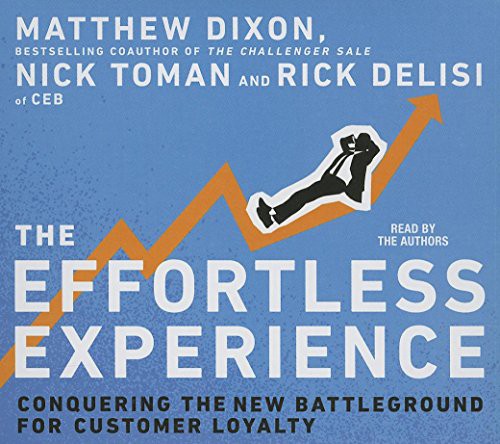
The authors of The Effortless Experience shatter this sacred cow through rigorous empirical research across millions of customer interactions.
They reveal a startling truth: delighting customers doesn't pay, and trying to exceed expectations is an expensive waste of time and capital.
Instead of chasing elusive 'delight,' organizations must pivot to a much more pragmatic, high-impact mission.
The secret to unlocking radical loyalty is simply making things radically easy.
The Myth of Customer Delight
Conventional wisdom tells us that service interactions are a battleground for customer affection.
We are taught that meeting expectations is baseline and exceeding them is the key to securing lifelong brand loyalty.
But the data tells a completely different story.
Delighting customers does not build loyalty; failing to solve their problems destroys it.
Service interactions are inherently disloyal by nature because customers contact support when something has already gone wrong. No amount of complimentary upgrades or theatrical enthusiasm can erase the fundamental frustration of a broken product or a billing error.
Trying to delight a frustrated customer is like spraying perfume on a dumpster fire—it simply doesn't address the root cause of the stench.
Understanding this reality frees your organization from the immense cost and operational drag of engineered heroics.
You no longer need front-line agents performing circus acts to impress people who just want their problem fixed quickly.
- Shift performance metrics away from emotional delight and toward friction elimination.
- Audit service budgets to redirect funds from 'extras' to core operational reliability.
- Retrain staff to focus on competence and speed rather than performative enthusiasm.
The Power of Low Effort
If delight is a dead end, what actually drives customer retention?
The answer is frictionless simplicity. Loyalty is a defensive game won by removing the hurdles that stand between the customer and a resolution.
Customers do not want to be amazed; they want to be unburdened.
When you make an interaction effortless, you dramatically reduce customer churn and increase wallet share.
The authors' research proves that low-effort experiences create a powerful psychological shield against competitors.
Customers stay because interacting with you is simply less painful than switching to someone else.
This requires a fundamental inversion of operational priorities.
Instead of asking how to make the experience memorable, you must ask how to make it forgettable in its absolute smoothness.
- Measure the physical and cognitive steps required to complete a standard support request.
- Eliminate redundant verification questions and unnecessary transfer loops.
- Design user journeys that require the absolute minimum cognitive load.
The Customer Effort Score
For years, Net Promoter Score (NPS) and Customer Satisfaction (CSAT) have reigned supreme as the gold standards of metric tracking.
Yet, both metrics fail to predict future customer behavior with any reliable precision.
Enter the Customer Effort Score, or CES.
CES asks one brutal question: 'How much effort did you personally have to put forth to handle your request?
CES is vastly superior because effort is the primary driver of disloyalty. While a high CSAT score might tell you a customer smiled during a call, a low CES score tells you they didn't have to call three times, explain their issue to four different people, or hunt for hidden contact information on your website.
Deploying CES across all touchpoints provides your leadership team with an unvarnished mirror of operational friction.
It pinpoints exactly where your processes are failing the customer.
- Implement post-interaction CES surveys immediately following resolution.
- Track effort trends across channels, products, and specific customer segments.
- Tie front-line team incentives directly to lowering overall effort scores.
The Hidden Drivers of Effort
Customer effort isn't just about how long a phone call takes or how many clicks a website requires.
The biggest drivers of effort are psychological and structural.
They hide in the blind spots of standard customer service operations.
The most exhausting experiences are those where the customer feels bounced, repeated, and trapped in bureaucracy.
Customers hate having to repeat themselves to multiple agents, being transferred across departments, and dealing with channel-switching penalties. When a digital process forces a customer to pick up the phone to finish a transaction, you have engineered a massive effort spike.
Identifying these hidden drivers requires mapping the entire customer journey from their perspective, not your org chart.
You must hunt down every instance of organizational siloed thinking that spills over onto the end user.
- Map end-to-end customer journeys to identify every handoff point and channel switch.
- Audit interactive voice response (IVR) menus for dead ends and repetitive loops.
- Train agents to capture full context so customers never have to repeat their story.
Experience Engineering
How you deliver a message matters just as much as the message itself.
Experience Engineering is the art of framing communications to guide customer perception and reduce psychological reactance during difficult service moments.
Language is an operational tool that can either calm a nervous customer or ignite their frustration.
Traditional service training encourages passive, accommodating language that often signals weakness or uncertainty.
Experience Engineering flips this script by using controlling language, positive language framing, and proactive posture to take charge of the interaction.
When an agent speaks with confident authority and guides the customer firmly through a resolution, the customer feels safe.
They stop worrying and start trusting the process, which radically lowers their perceived effort.
- Replace passive phrases like 'I'll try my best' with assertive phrases like 'Here is what we are going to do.'
- Use anchoring techniques to manage customer expectations before delivering bad news.
- Eliminate policy-focused language in favor of outcome-focused dialogue.
Controlling the Conversation
Service interactions often derail because agents surrender control of the conversation to panicked or demanding customers.
To deliver an effortless experience, the representative must act as an expert pilot, not an order taker.
Taking control does not mean being aggressive; it means being structurally authoritative.
Customers calling for support are often overwhelmed and looking for a steady hand.
When an agent hesitates or offers too many choices, decision fatigue sets in. Choice overload is a silent killer of customer satisfaction, creating massive cognitive load during already stressful moments.
By narrowing options down to the optimal one or two pathways, agents can shepherd customers smoothly to a resolution without making them do the heavy lifting of decision-making.
- Train agents to limit options and provide single, clear recommendations.
- Interrupt rambling customers gently to steer the dialogue back to problem-solving.
- Establish standard operating procedures for taking immediate command of chaotic calls.
Empowering the Front Line
You cannot deliver an effortless customer experience if your employees are trapped in bureaucratic red tape.
Front-line empowerment is the engine that drives speed, agility, and low effort.
If your agents have to ask permission to solve a basic problem, your customer is already experiencing maximum effort.
Most organizations preach empowerment while maintaining rigid policies, approval chains, and punitive monitoring systems.
True empowerment means giving agents the psychological safety and financial discretion to make things right immediately.
When you trust your people, they trust your customers.
This creates a frictionless cultural feedback loop that translates directly into lower effort scores and higher retention rates.
- Set clear spending and resolution thresholds so agents can act without managerial sign-off.
- Reward problem-solving agility over adherence to rigid call-duration metrics.
- Create a culture of psychological safety where front-line insights are actively harvested.
Building a Low-Effort Culture
Optimizing customer service is not a one-off project; it is an enterprise-wide cultural transformation.
Achieving effortless operations requires aligning every department—from product development to finance—around the singular metric of customer effort.
Simplicity is not a tactic; it is an organizational religion.
When product teams design features that create downstream support friction, the entire low-effort ecosystem collapses upstream.
True mastery requires feeding customer effort data back into product design, marketing, and sales to prevent issues before they ever manifest.
By treating effort reduction as a core strategic pillar, you build an unassailable competitive advantage that your rivals cannot easily copy.
- Share CES data across all departments, especially product and engineering.
- Tie executive compensation and departmental KPIs to enterprise-wide effort reduction.
- Conduct quarterly friction audits across every customer touchpoint and operational silo.
The 'Delight' Trap: Why Most Companies Waste Millions Chasing the Wrong Thing
Every company wants happy customers. We're told to 'delight' them, to go above and beyond. But what if all that extra effort is actually making things worse? This book promises a simpler, cheaper way to keep customers loyal, but does it really work in the messy world of everyday business?
We all start out wanting to make our customers happy. We've been taught to 'wow' them, to go above and beyond, to sprinkle a little magic on every interaction. This book promises to cut through that noise, offering a simpler, more effective path to customer loyalty.
But then you dive in, and the first few chapters hit you like a cold splash of water. All those 'delightful' gestures? The authors argue they're mostly wasted effort. It feels counter-intuitive, almost harsh, to think that trying less could be better.
Then the data starts piling up. Stories of real companies, real customers, and the sheer frustration of dealing with simple tasks that become complicated. You begin to see your own experiences reflected, remembering those times you just wanted something done, not a song and dance.
One big takeaway is the 'Next Issue Avoidance' strategy. Instead of just fixing the immediate problem, you learn to spot and solve the next thing that might trip up your customer. It's about thinking ahead, making the path truly smooth.
Another powerful tool is the focus on measuring customer effort. It's not about how happy they are, but how easy it was. This simple shift gives you a clear target: find the friction, then eliminate it.
You finish the book with a completely new lens on customer service. It's less about grand gestures and more about invisible efficiency. It's about building loyalty by making life easier, not just happier, for the people who keep your business going.
The Honest Verdict
Read this if you're a business leader, customer service manager, or anyone frustrated by high customer churn and rising service costs, looking for a data-driven path to efficiency.
Skip this if you're looking for warm, fuzzy customer 'delight' strategies or if your company isn't ready to challenge its deeply held beliefs about service.
Apply The 20% That Actually Works
Don't get bogged down in hundreds of pages. Master the full executive framework in 15 minutes, or open the 1-page action worksheet directly.
-
Explores the power of Net Promoter Score (NPS) to measure customer loyalty, offering a complementary data-driven approach to understanding customer sentiment.
-
Provides a detailed roadmap for creating an exceptional 100-day customer experience that builds lasting loyalty and prevents churn from the very beginning.
-
From one of the same authors, this book challenges traditional sales wisdom, much like 'Effortless Experience' challenges service dogma, focusing on what truly drives results.
Executive Synthesis & Monday Morning Action
The central thesis of The Effortless Experience is revolutionary in its simplicity: stop trying to amaze your customers and start making your business easy to deal with.
The pursuit of customer delight is an expensive illusion that drains resources while ignoring the fundamental psychology of retention.
True customer loyalty is earned not by giving people reasons to stay, but by removing every single reason they might have to leave.
By measuring Customer Effort Scores, eliminating invisible psychological friction, empowering your front-line teams, and taking authoritative control of every interaction, you transform customer service from a costly operational headache into your most powerful engine for long-term growth and market dominance.