FOUNDATIONAL THESIS
Most people believe the future will be defined by globalization—copying things that work in one market and scaling them across the globe.
True technological progress requires inventing something entirely unprecedented: going from 0 to 1.
Every moment in business happens only once: the next Bill Gates will not build an operating system, and the next Mark Zuckerberg will not create a social network.
If you copy these pioneers, you are not learning from them. To create enduring value, you must escape competition and build something unique.
The Contrarian Truth: Vertical Progress vs. Horizontal Globalization
Whenever Peter Thiel interviews a founder or candidate, he asks a deceptively simple question: 'What important truth do very few people agree with you on?'
This question is demanding because brilliant thinking is rare, but courage is rarer than genius.
Most answers merely restate conventional wisdom. A true contrarian truth is a hidden insight into reality that consensus systematically overlooks.
In a world of scarce resources, globalization without technological innovation is completely unsustainable; it simply spreads ecological and economic strain.
Progress takes two distinct forms. Horizontal progress means copying things that work—taking something from 1 to n.
Horizontal progress is globalization: replicating an existing process or business model across different geographies.
Vertical progress means doing new things—going from 0 to 1. Its shorthand name is technology.
Most startups fail because they get trapped in horizontal copycatting. They add minor cosmetic tweaks to existing tools and stumble into bloody commodity wars.
The zero-to-one mindset acts as an uncompromising subtractive filter: it forces you to stop benchmarking against incumbents and ask what proprietary breakthrough is completely missing from the world.
To build a zero-to-one company, evaluate your strategy against this scorecard:
- 10x Proprietary Breakthrough: Deliver a core capability ten times better than the closest substitute.
- Hyper-Niche Domination: Capture 80%+ share of a small market before expanding outward.
- Network Effects & Scale: Design compounding loops where marginal delivery costs approach zero.
- Definite Master Plan: Replace blind iteration with a deliberate 10-year architectural roadmap.
Like It's 1999: Overcoming the False Dogmas of the Dot-Com Crash
The collapse of the 1999–2000 dot-com bubble left deep psychological scars across the tech industry.
Entrepreneurs and investors internalized four traumatic lessons that continue to stifle ambitious innovation today.
A bad plan is infinitely better than no plan, and boldness is vastly superior to triviality.
The four post-bubble dogmas dictate:
- Make Incremental Advances: Avoid bold leaps at all costs.
- Stay Lean and Unplanned: Iterate blindly without a fixed master plan.
- Improve on Existing Rivals: Never try to create brand-new markets. 4. Focus on Product, Not Sales: Assume code sells itself and ignore distribution.
The business world learned the exact wrong lessons from the dot-com crash, mistaking temporary speculative excess for structural invalidity.
To build generational companies, contrarian operators must deliberately invert these four false dogmas:
- Be Bold, Not Trivial: Ambitious missions attract elite talent; trivial niches lead to low-margin grind.
- A Definite Plan Trumps Iteration: Agility without an overarching architectural blueprint produces local optimizations without lasting impact.
- Competitive Markets Destroy Profits: Escape crowded bloodbaths and build uncontested creative monopolies.
- Sales Matter as Much as Product: Distribution channels and go-to-market execution are equal partners to underlying software.
All Happy Companies Are Different: The Creative Monopoly Imperative
Textbook economics celebrates perfect competition as the ideal market state.
In reality, competition is a disaster for founders and innovation.
Under perfect competition, identical firms produce interchangeable commodities, driving prices to marginal cost and wiping out all economic profit.
Under perfect competition, all firms are unhappy in the same way because rivalry consumes every cent of profit; monopolists are unique because they dominate their category.
If you want to create and capture lasting value, build a creative monopoly; competition is an ideology that destroys profit.
Creative monopolists introduce entirely new categories of value to the world, such as Google in search or Apple in smartphones.
High, sustainable margins give monopolists the freedom to invest heavily in multi-decade R&D, pay world-class talent, and expand technological frontiers.
A durable monopoly is built upon four proprietary pillars:
- 10x Proprietary Technology: Having an advantage that makes your core product an order of magnitude superior.
- Network Effects: Crafting mechanics where each new user enhances value for everyone else.
- Economies of Scale: Fixed engineering costs where marginal production costs approach zero.
- Unmistakable Brand Moat: Cultivating iconic positioning backed by undeniable functional superiority.
The Ideology of Competition & The Last Mover Advantage
Society conditions us from childhood to measure our self-worth through standardized competitive rivalries.
In business, this causes founders to obsessively fixate on direct peers, waging petty feature wars while losing sight of the broader market.
Being the first mover is merely a tactic; being the last mover who makes the final breakthrough and captures the market is the ultimate victory.
Competition makes people copy the past and fight over scraps instead of creating something radically new.
The true value of any business equals the discounted present value of the cash flows it will generate 10 to 20 years into the future.
Most technology giants generate the vast majority of their enterprise value in years 10 through 20, rather than during their initial hype spike.
To secure the last mover advantage:
- Dominate a Small Niche First: Perfect your value proposition in a micro-segment where you can claim 100% share.
- Scale Consecutively Outward: Expand into adjacent markets from an unassailable position of core monopoly strength.
- Avoid Premature Disruption: Build unique capabilities where incumbents are structurally blind or unable to respond.
You Are Not a Lottery Ticket: Definite Optimism & The Power Law
Is success in business the result of random luck or deliberate design?
Western culture has drifted into indefinite optimism: the passive belief that the future will naturally improve without anyone having a concrete plan.
Indefinite thinking leads to excessive diversification, incremental hedging, and a fear of making large, decisive commitments.
The biggest secret in venture capital and business is the Power Law: a tiny handful of outlier breakthroughs will outperform all other initiatives combined.
You are not a lottery ticket; the most successful leaders are definite optimists who design a concrete future and work relentlessly to engineer it.
Power Law dynamics dictate that in a portfolio, the single best investment will return more than all other investments combined.
This mathematical reality applies directly to your company roadmap and daily focus:
- Reject Broad Diversification: Stop diluting energy across ten mediocre projects; concentrate on your highest-conviction thesis.
- Isolate the 90/10 Leverage Point: Identify the single metric, feature, or channel that generates 90% of your momentum.
- Double Down on Outliers: Direct disproportionate capital and talent toward exponential compounding loops.
Secrets, Foundations & The 7-Question Filter
Every great business is built on a secret: an important truth hidden in plain sight that consensus assumes is either impossible or too strange to explore.
If you believe there are no secrets left in the world, you surrender to convention and guarantee mediocrity.
Thiel's Law of Foundations states that a startup messed up at its foundation cannot be fixed later.
The initial alignment between co-founders, board members, and equity splits sets an indelible cultural trajectory.
If you can achieve solid answers to five or six of these questions, you will build a good business; if you nail all seven, you will dominate an industry.
Every founder and operator must stress-test their business against the 7 foundational questions of category dominance.
The 7 Foundational Questions:
- The Engineering Question: Can you create breakthrough technology that is 10x better than the closest substitute?
- The Timing Question: Is now the exact right inflection point in infrastructure and market maturity?
- The Monopoly Question: Are you starting with a large share of a small, highly concentrated market? 4. The People Question: Do you have the right core team with aligned incentives and deep mutual trust?
- The Distribution Question: Do you have a clear, scalable mechanism to deliver your product to customers? 6. The Durability Question: Will your market position still be defensible and profitable in 10 to 20 years?
- The Secret Question: Have you identified a unique contrarian opportunity that competitors have failed to see?
The 'Zero to One' Trap: Why Most People Read It Wrong
Millions of readers pick up 'Zero to One' hoping for a secret map to build the next big thing. They dream of escaping the rat race, creating something truly new. But does it actually deliver that blueprint for everyone trying to make a mark?
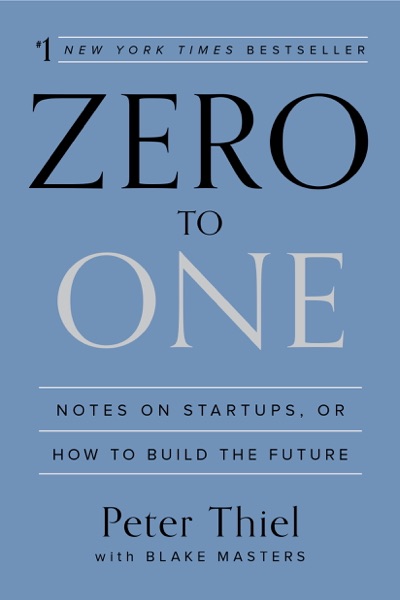
You pick up 'Zero to One' with high hopes. The cover promises a path to building the future. You're ready to unlock the secrets of Silicon Valley's biggest thinkers. Then you hit the core idea: 'Competition is for losers.' It's a jolt. You start questioning everything you thought you knew about business. No more fighting for scraps. But as you read on, a nagging feeling starts. The examples are all massive tech companies. You wonder, 'Can I really apply this to my own project? Is this just for billionaires?' It feels a bit out of reach. Still, two big ideas stick. First, the push to create something truly new, not just copy. This 'zero to one' thinking changes how you view problems. Second, the power of 'definite optimism' – actually planning for a better future, not just waiting for it. These aren't easy lessons. They demand a different kind of thinking. But for those who grasp them, the payoff can be huge.
The Honest Verdict
Read this if you're a founder, investor, or ambitious leader aiming to build a truly unique, category-defining company and are ready to challenge conventional wisdom.
Skip this if you're looking for a simple how-to guide for a small business, or if you prefer incremental improvements over radical innovation.
Apply The 20% That Actually Works
Don't get bogged down in hundreds of pages. Master the full executive framework in 15 minutes, or open the 1-page action worksheet directly.
-
For a more practical, iterative approach to building new products and businesses with less risk.
-
If you want to understand how established companies make the leap to sustained excellence, focusing on discipline and leadership.
-
For a deep dive into how to scale a company at lightning speed, once you've found your 'zero to one' idea.
Executive Synthesis & Monday Morning Action
Building the future requires a conscious refusal to follow consensus dogma.
By engineering proprietary 10x technology, dominating a concentrated niche, and escaping competition, you position your enterprise to capture exponential Power Law returns.
True innovation is never an accident; it is the deliberate result of definite optimism, secret discovery, and ruthless execution.
When you go from zero to one, you stop competing in someone else's red ocean and start constructing a proprietary category of one.