FOUNDATIONAL THESIS
Most people spend their entire lives trapped in the Rat Race: working harder, earning promotions, and watching their expenses rise to match their salary.
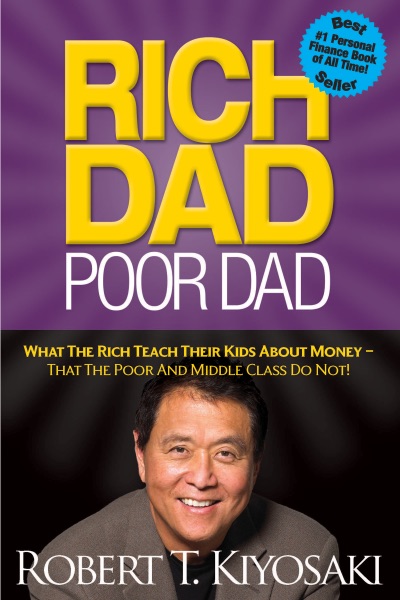
Robert Kiyosaki's Rich Dad Poor Dad contrasts two opposing financial philosophies.
By understanding the difference between real assets and liabilities and mastering financial literacy, you transform money from a master into a tireless servant.
The Rich Don't Work for Money
Most people wake up, go to work, pay bills, and repeat the cycle every single day.
The poor and the middle class work for money. The rich have money work for them.
Two human emotions drive the financial rat race: Fear of having no money, and Greed for the things money can buy.
A paycheck is a short-term solution to a long-term problem.
To break out of the employee trap, you must shift your mindset:
- Stop relying exclusively on salary increments to solve financial stress.
- Learn to master your emotions rather than reacting impulsively to financial fear.
- Use your free hours to study investing, business systems, and tax strategies.
- Look for investment opportunities that other people miss because of fear.
When you stop working for money, you gain the clarity to build enduring wealth.
Why Teach Financial Literacy? (Assets vs. Liabilities)
You think that your primary residence is your biggest financial asset.
An asset is something that puts money in your pocket. A liability is something that takes money out of your pocket.
If you buy a home with a massive mortgage, property taxes, and maintenance, it takes money out of your pocket every month—making it a liability.
The wealthy buy assets. The poor only have expenses.
The middle class buys liabilities they think are assets.
Master the basic balance sheet:
- Asset Column: Rental properties, dividend stocks, royalties, businesses that run without your presence.
- Liability Column: Mortgages, auto loans, credit card balances, luxury toys.
- Reinvest cash flow from assets directly back into buying more assets.
- Keep liabilities and personal overhead as low as possible.
Understanding this single distinction is the foundation of all financial freedom.
Mind Your Own Business
When asked what business he was in, Ray Kroc (founder of McDonald's) answered: 'My business is real estate.'
There is a big difference between your profession and your business. Your profession is what you do for a paycheck; your business is your asset column.
Most people spend their lives minding everyone else's business: their employer's, the government's, and the bank's.
Keep your daytime job, but start minding your own business by acquiring real assets.
Build your personal asset portfolio:
- Acquire businesses that do not require your day-to-day physical management.
- Invest in income-generating real estate with positive cash flow.
- Buy paper assets (index funds, equities, notes) with long-term compound potential.
- Create intellectual property and content that generates recurring royalties.
Minding your own business guarantees your net worth grows independently of your job.
The History of Taxes and the Power of Corporations
You believe that taxes are designed to penalize the wealthy and redistribute to the poor.
In reality, the rich understand the legal power of the corporation. Employees earn, pay taxes, and spend what is left. Corporations earn, spend everything possible, and pay taxes on what is left.
This legal asymmetry allows businesses to deduct expenses before paying taxes, while employees are taxed on gross wages.
Financial IQ consists of four broad areas of expertise: Accounting, Investing, Market Understanding, and the Law.
Leverage the legal advantages of business entities:
- Learn how corporations protect your personal assets from litigation.
- Use pre-tax dollars for legitimate business operations and research.
- Study tax codes and incentives for capital investment and real estate.
- Surround yourself with sophisticated CPAs and legal advisors.
Financial intelligence allows you to keep the wealth you work hard to generate.
The Rich Invent Money
You wait for the perfect, safe investment opportunity to fall into your lap.
In the real world, it is not the smart who get ahead, but the bold. Financial intelligence is simply having more creative options to solve financial problems.
Great investors do not just buy pre-packaged funds; they assemble deals, negotiate terms, and create value where others see risk.
Your mind is your single most powerful asset. If trained properly, it can create enormous wealth instantly.
Develop the three core skills of the creative investor:
- How to find an opportunity that everyone else has missed.
- How to raise money and structure financing without relying on personal bank debt.
- How to organize and lead smart, capable people.
Financial creativity turns ordinary situations into multi-million dollar assets.
Work to Learn, Don't Work for Money
You focus on becoming hyper-specialized in one narrow technical domain.
If you want to become wealthy, seek work for what you will learn, rather than what you will earn. Look at what skills you must acquire before choosing a job.
Kiyosaki joined the Marine Corps to learn leadership and Xerox to master cold-calling sales—the exact skills he needed to build a global business.
The world is filled with brilliant, talented paupers who are one skill away from massive success.
Master the essential universal business skills:
- Sales & Marketing: The ability to communicate, persuade, and sell your vision.
- Communication & Public Speaking: Leading teams and presenting ideas clearly.
- Systems Management: Organizing workflows and automating operations.
- Cash Flow Management: Reading financial statements and allocating capital.
Cross-disciplinary mastery unlocks exponential leverage across any industry.
Overcoming the Five Obstacles to Wealth
Even financially educated people fail to build wealth because they stumble over five internal roadblocks.
The primary difference between a rich person and a poor person is how they manage fear. Everyone hates losing money, but the rich use failure as tuition for success.
Kiyosaki identifies the 5 killers of wealth:
- Fear: Paralyzing dread of losing money prevents taking calculated risks.
- Cynicism: Listening to doom-sayers and critics who never take action.
- Laziness (Busy-ness): Staying superficially busy to avoid facing financial reality. 4. Bad Habits: Paying yourself last after paying all bills and creditors.
- Arrogance: Believing what you don't know isn't important.
Conquering these psychological traps clears the runway for unstoppable financial growth.
Action Protocol: Getting Started Today
Reading books without immediate execution creates zero wealth.
Stop doing what is not working, and look for something new. Take action right now.
Execute the 5-step financial awakening protocol:
- Find a Reason Greater than Reality: Define your deep emotional purpose for freedom.
- Feed Your Mind Daily: Invest in courses, financial books, and mentorship.
- Choose Friends Carefully: Surround yourself with ambitious, growth-minded peers. 4. Pay Yourself First: Invest 20% of income into assets before paying any discretionary expenses.
- Learn to Use Leverage & Compound Returns: Reinvest every dollar of cash flow.
Wealth is not a fantasy; it is a deliberate series of daily asset purchases.
The Money Myth: Why 'Rich Dad Poor Dad' Still Divides Millions
Millions of people pick up 'Rich Dad Poor Dad' hoping for a secret map to wealth. They want to escape the daily grind. They dream of financial freedom. But does this book truly deliver on that promise, or does it just offer a tantalizing glimpse without the real tools?
Many people grab 'Rich Dad Poor Dad' with high hopes. They're tired of the rat race. They want a way out. Kiyosaki promises to show them a different path, a secret the rich know that others don't. It feels exciting, like unlocking a hidden level in a game.
Then comes the core idea: assets versus liabilities. This hits hard. Suddenly, your house might not be an asset. Your car definitely isn't. It's a lightbulb moment for millions, making you rethink everything you thought you knew about money.
But soon, a question starts to nag: 'Okay, I get it, but how do I do it?' The book tells you to buy assets. It tells you to start a business. It doesn't always give you the exact blueprint for someone starting from zero. This can be frustrating for busy managers or young people trying to get ahead.
Still, the book plants a seed. It forces you to see money differently. It pushes you to learn about investing, about taxes, about business. It's less about specific investments and more about changing your entire financial operating system.
You might not become a millionaire overnight. But you'll definitely start looking at your paycheck, your spending, and your future with a whole new set of eyes. That shift in perspective, for many, is worth the read.
The Honest Verdict
Read this book if you need a powerful shift in your financial mindset and are ready to challenge traditional views on money and work.
Skip this book if you're looking for a detailed, step-by-step guide to investing or a conservative approach to personal finance.
Apply The 20% That Actually Works
Don't get bogged down in hundreds of pages. Master the full executive framework in 15 minutes, or open the 1-page action worksheet directly.
-
For a clear, step-by-step plan to get out of debt and build financial stability.
-
Offers practical, automated systems for saving, investing, and spending consciously.
-
Explores the behavioral aspects of money and why people make the financial decisions they do.
Executive Synthesis & Monday Morning Action
Financial independence is not determined by how much money you make, but by how much money you keep and how hard that money works for you.
By acquiring cash-flowing assets, minding your own business, and overcoming fear and cynicism, you escape the rat race forever.