FOUNDATIONAL THESIS
Most marketing fails because companies talk endlessly about themselves rather than the actual survival needs of the buyer.
They act like the hero of the story, forcing customers to burn precious cognitive calories trying to decipher what they do.
If you confuse, you lose, because the human brain is hardwired to tune out noise and conserve mental energy.
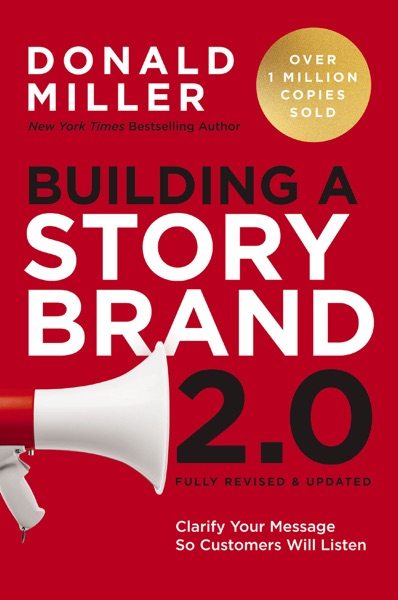
This masterbrief breaks down Donald Miller's proven 7-part StoryBrand framework to clarify your message and drive explosive conversion.
A Character: Position the Customer as the Hero
The fundamental rule of modern branding is simple: your customer is the hero, not your company.
When a company positions itself as the hero, it creates an adversarial relationship where the customer feels pitched to instead of invited.
The customer is the hero, and your brand is the guide who helps them win.
In every great movie, the narrative begins when the hero wants something specific and urgent.
You must define a singular, high-stakes desire that your customer desperately wants in relation to your product.
When you define this core desire clearly, you give the entire customer journey an immediate, compelling direction.
To position your customer as the hero:
- Define a Singular Aspiration: Identify the exact transformation your buyer seeks.
- Eliminate Brand Ego: Strip out self-indulgent origin stories from your homepage.
- Pass the Grunt Test: Ensure any visitor can understand what you offer within 5 seconds.
- Focus on Survival: Frame your value around saving time, making money, or building status.
Has a Problem: Name the Villain at Three Levels
Stories only become interesting when a hero faces a villain that creates conflict.
In business, customers buy solutions to internal frustrations, not just external mechanical obstacles.
People do not buy the best products; they buy the products they can understand the fastest.
To compel your customer to act, you must address their conflict across three distinct levels:
- External Problem: The tangible, physical obstacle blocking the hero.
- Internal Problem: The emotional frustration, anxiety, or self-doubt caused by the external obstacle.
- Philosophical Problem: Why it is fundamentally wrong or unjust for this problem to exist.
Customers buy solutions to internal problems; resolve their emotional frustration to win lifelong loyalty.
When you articulate their internal problem better than they can, they instinctively trust that you have the solution.
And Meets a Guide: Empathy and Authority
Heroes never start out equipped to solve their own problems; if they were, they wouldn't be in trouble.
They need a guide who has walked the path before and possesses the wisdom to lead them through the storm.
You are not Luke Skywalker; your business is Yoda.
A great guide must demonstrate two mandatory qualities:
- Express Genuine Empathy: Show your customer that you deeply understand and validate their daily pain.
- Demonstrate Authority: Establish competence through testimonials, data, certifications, and proven case studies.
Empathy creates an emotional connection, while authority gives the hero confidence that you can deliver.
Keep your brand humble while demonstrating undeniable competence.
Who Gives Them a Plan: Eliminate Customer Confusion
Even after meeting an authoritative guide, the hero hesitates to take action.
Customers fear making a financial mistake, wasting time, or getting trapped in a complicated process.
Confusion is the ultimate enemy of conversion.
To break customer paralysis, the guide must lay down a simple, low-friction plan:
- Process Plan: A 3 to 4 step visual roadmap that shows how easy it is to do business with you.
- Agreement Plan: A commitment that removes financial, technical, or operational risk.
A clear 3-step process eliminates cognitive friction and gives buyers the confidence to step forward.
Make the next step blindingly obvious to any first-time visitor.
And Calls Them to Action: Demand a Clear Decision
Human beings do not make major life or financial decisions unless they are challenged to do so.
Passive buttons like 'Learn More' fail because they place the cognitive burden back onto the buyer.
If you do not explicitly ask for the sale, you are quietly planning for your business to fail.
Your marketing ecosystem must deploy two types of calls to action:
- Direct Call to Action: Bold, unambiguous buttons like 'Buy Now' or 'Schedule a Call' placed prominently above the fold.
- Transitional Call to Action: Value-packed lead generators (PDFs, webinars) that capture prospective buyers who are not yet ready to purchase.
Place a high-contrast Direct CTA button in the top-right corner of your website and repeat it down the page.
Make your transactional invitation urgent, unmistakable, and effortless.
That Helps Them Avoid Failure: Raise the Stakes
Every compelling story hinges on stakes: what happens if the hero fails to act?
If nothing is at risk, the audience loses interest and the customer postpones the purchase indefinitely.
You must clearly articulate the negative consequences your customer avoids by doing business with you.
Human psychology is heavily governed by loss aversion: people are more motivated to avoid a loss than to gain a benefit.
Gently remind your audience of the exact financial, emotional, or operational costs of inaction.
To inject healthy tension into your marketing:
- Identify 2–3 Failure Scenarios: Clarify what mess or loss occurs if they stick with the status quo.
- Highlight Wasted Resources: Show the time and capital squandered on mediocre alternatives.
- Balance Pain with Hope: Use failure as a seasoning to create urgency, not as a scare tactic.
And Ends in Success: Paint the Transformational Vision
Never assume your customer automatically understands how their life will improve after buying your product.
You must explicitly paint a vibrant, emotionally resonant picture of their successful future.
People do not just buy products; they buy a better, more capable version of themselves.
Offer your customer three specific forms of successful resolution:
- Winning Status: Gaining respect, prestige, or recognition among their peers.
- Achieving Relief: Experiencing the peace of mind that comes from solving a chronic frustration.
- Reaching Self-Actualization: Fulfilling their ultimate personal or professional potential.
Show your customer exactly what life looks like on the other side of their heroic victory.
When you clarify their transformation, you turn casual buyers into passionate brand champions.
The Clarity Trap: Why StoryBrand's Simple Truth Still Trips Up Millions
Millions of business owners pick up "Building a StoryBrand" hoping for a magic bullet. They dream of crystal-clear marketing that finally makes sales easy. But the promise of simple clarity often crashes into the messy reality of running a business.
When "Building a StoryBrand" first landed, it felt like a breath of fresh air. Finally, a simple way to cut through the noise! Many of us, myself included, picked it up with high hopes. We imagined our marketing messages instantly becoming clear, our sales soaring.
But then came the work. Trying to apply the 7-part framework to our own businesses felt like trying to untangle a giant knot. It was easy to understand the concepts, but surprisingly hard to do. We'd write copy, then realize we were still talking too much about ourselves. It was a humbling reality check.
The first real breakthrough hit when I truly grasped the "customer as hero" idea. It wasn't just a nice phrase; it was a complete flip. Suddenly, every piece of marketing started with their struggle, their desires. It made everything click.
Then came the power of the "guide." Realizing our brand wasn't the star, but the wise mentor, changed how we presented our solutions. We weren't selling a product; we were offering a map and a sword to help our customers conquer their dragons. This shift made our message resonate deeply.
It's not a magic wand, and it demands constant effort. But for millions of working professionals and busy managers, these core ideas have transformed how they communicate. It forces clarity, and clarity, as Miller says, is king.
The Honest Verdict
You're a small business owner, entrepreneur, or marketing professional struggling to articulate your value and connect with customers.
You're an experienced copywriter or marketer looking for advanced, nuanced strategies beyond foundational messaging.
Apply The 20% That Actually Works
Don't get bogged down in hundreds of pages. Master the full executive framework in 15 minutes, or open the 1-page action worksheet directly.
-
Offers a practical, content-driven approach to answering customer questions, complementing StoryBrand's messaging clarity.
-
Explores the principles behind making ideas memorable and impactful, providing a broader context for crafting compelling messages.
-
Delves into the fundamental psychological triggers that drive human behavior and decision-making, offering deeper insights into persuasion.
Executive Synthesis & Monday Morning Action
Clarifying your message is the single highest-leverage operational decision you can make.
When you stop talking about your company and position your customer as the hero of the story, you eliminate cognitive friction and capture undivided attention.
By serving as an empathetic, authoritative guide who offers a simple plan, challenges them with bold calls to action, and paints a clear picture of success versus failure, you unlock exponential conversion.
Clarity always trumps cleverness: simplify your message, invite your customer into a heroic journey, and watch your enterprise scale.