FOUNDATIONAL THESIS
You feel stretched too thin, overworked, and underutilized. Society sells the lie that you can have it all and do it all.
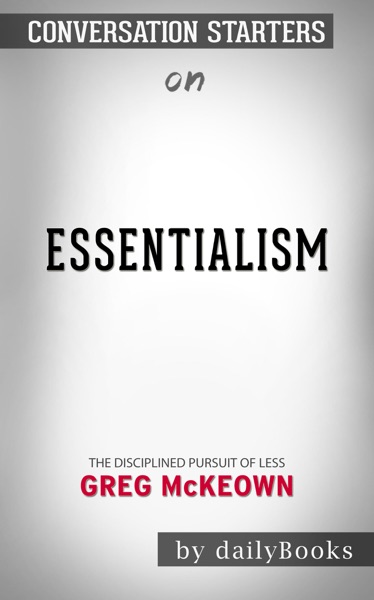
Greg McKeown's Essentialism dismantles this myth, offering a systematic discipline for discerning what is vital, eliminating the trivial noise, and channeling your limited energy into massive breakthrough execution.
The Core Mindset of the Essentialist
You try to please everyone, say yes to every meeting, and take on every new project.
The way of the Essentialist isn't about getting more things done; it's about getting the right things done. It is about making the wisest possible investment of your time and energy.
The Non-Essentialist believes everything is important and tries to fit it all in.
The Essentialist realizes that almost everything is noise and very few things are exceptionally valuable.
This requires embracing the Reality of Trade-Offs: every time you say yes to one obligation, you are implicitly saying no to countless others.
True freedom begins when you own your power of choice.
The Paradox of Success
You achieve early success through intense focus on a single craft.
Success leads to more opportunities and options. Those options create widespread distraction, diluting your focus until you fail at what made you successful in the first place.
This is the Paradox of Success: growth naturally seeds the chaos of non-essential commitments.
Without deliberate subtraction, your past success becomes the primary bottleneck to future greatness.
Break the cycle of expansion:
- Recognize that not all opportunities are worth pursuing.
- View every new invitation with rigorous skepticism.
- Ruthlessly prune legacy projects that no longer align with your highest mission.
- Guard your calendar with ferocious intentionality.
Staying essential requires constant pruning of good options to protect the great.
Explore: The 90 Percent Rule
You evaluate opportunities with vague, lenient criteria and end up overwhelmed.
If it isn't a clear and definitive yes, then it must be a clear and definitive no. Apply the 90 Percent Rule.
Rate any opportunity on a scale of 0 to 100 based on your most important criteria.
If an option scores less than a 90, discard it immediately as a zero.
Apply extreme selectivity to your decision filters:
- Define 3 minimum requirements and 3 ideal, extreme criteria.
- If an opportunity fails even one minimum requirement, reject it immediately.
- If it fails 2 out of 3 ideal criteria, reject it as well.
- Reject 'pretty good' options so you retain capacity for exceptional ones.
Uncompromising standards guarantee you only invest in transformative opportunities.
The Courage of the Graceful 'No'
You fear saying no because you worry about disappointing colleagues or damaging relationships.
When you say no, you trade a momentary flash of social awkwardness for long-term respect and strategic focus.
People respect leaders who are clear about their boundaries and priorities.
Separate the decision from the relationship: saying no to a request is not rejecting the person.
Deliver the graceful no with elegance:
- The Soft 'No': 'I am fully committed to our top project, so I cannot take this on right now.'
- The Trade-off Pivot: 'I can gladly do X, but which of my current priorities would you like me to deprioritize?'
- The Pause: Never say yes immediately; always respond with 'Let me check my calendar and get back to you.'
- The Referral: Direct the request to someone better suited.
A clear no protects the commitments you have already made.
Uncommit: Overcoming Sunk Cost Bias
You keep investing time and money into doomed initiatives simply because you have already spent so much.
Sunk Cost Bias makes you throw good energy after bad. An Essentialist asks: 'If I were not invested in this project today, how much would I pay to get into it?
If the answer is nothing, you must uncommit immediately.
Stop trying to justify past losses; make decisions strictly based on future utility.
Practice zero-based time budgeting:
- Audit all recurring meetings and commitments every quarter.
- Pretend you are starting your calendar from a blank canvas.
- Re-apply for every obligation as if it were a brand-new proposal.
- Kill off zombie projects before they consume another hour.
Uncommitting from dead weight instantly restores your strategic agility.
Architect Buffers: The Art of Planning for Chaos
You plan your schedule assuming best-case scenarios where nothing ever goes wrong.
An Essentialist accepts that the unexpected is entirely expected. Build a 50 percent buffer into every estimate and schedule.
Without buffers, a single minor delay cascades into full-blown crisis mode.
A buffer is not wasted time; it is an emotional and operational shock absorber.
Engineer robust margins into your daily operating rhythm:
- If you estimate a task will take 1 hour, block out 90 minutes.
- Leave 30–60 minutes of completely unscheduled white space on your daily calendar.
- Conduct premortems: identify what could go wrong before launching a project.
- Create redundant backups for critical workflows.
Generous buffers turn chaotic emergencies into calm, manageable events.
Subtract: Remove the Core Obstacle
When facing a difficult project, you try to push harder by adding more resources or effort.
An Essentialist doesn't ask 'How can we add more pressure?' They ask 'What is the single constraint holding back the flow, and how do we remove it?
Inspired by Theory of Constraints, true acceleration comes from eliminating the bottleneck.
Removing one core obstacle creates more momentum than adding ten new initiatives.
Isolate and dismantle your bottlenecks:
- Map the entire workflow from start to finish.
- Identify the slowest step or the most frequent point of confusion.
- Strip away unnecessary approvals, redundant checks, and complex software.
- Simplify the procedure until execution becomes almost effortless.
Subtraction is the purest form of operational leverage.
The Essential Life: Routine, Focus, and Flow
You rely on spontaneous willpower every day to figure out what to do next.
Routine is one of the most powerful tools for eliminating non-essentials. When you design a routine, the right behavior becomes automatic.
An Essentialist routine removes decision fatigue and protects cognitive energy for deep breakthroughs.
Live by design, not by default.
Anchor your life in essentialist rituals:
- Protect your sleep as a non-negotiable asset for peak cognitive performance.
- Dedicate time daily to read, think, and reflect without digital interruptions.
- Focus entirely on the present moment—ask: 'What is important right NOW?'
- Experience the quiet joy of a deeply focused, purposeful existence.
The essential life is not about doing less for the sake of it; it is about doing what matters fully.
The 'Less Is More' Lie: Why Essentialism Feels Impossible for Most
Millions of readers pick up "Essentialism" hoping to finally escape the endless busy trap. They dream of a life where only the important things get done. But then real life hits. Can a book truly teach you to say "no" to your boss, your family, or even yourself?
You pick up "Essentialism" feeling swamped. Your calendar is packed. Your to-do list never shrinks. You're tired of feeling busy but not productive.
The book promises a way out. It says you can do "less but better." It sounds amazing. You imagine a life where you only focus on what truly matters.
Then you try to apply it. Your boss asks for another project. Your friend needs a favor. Your kids have a new activity. Saying "no" feels impossible. You feel guilty. The dream of essentialism starts to fade.
But then, a light bulb moment. The book isn't just about saying "no." It's about saying "no" gracefully. It's about protecting your focus, not just rejecting people. You learn to offer alternatives, to explain your current priorities. This small shift makes a huge difference.
Another breakthrough hits: the "hell yes" test. If something isn't a clear, enthusiastic "yes," it's a "no." This simple rule helps you cut through the noise. You start to see how many "good" things were actually distracting you from the "great" things.
It's not easy. It's a constant fight against the world's demands. But with these tools, you start to make progress. You find pockets of time you didn't know you had. You feel less busy, and more importantly, more effective.
The Honest Verdict
Read this if you feel overwhelmed, have some control over your schedule, and are ready to make big, uncomfortable changes to reclaim your time.
Skip this if you're looking for quick productivity hacks, are in a highly reactive job, or have very little control over your daily demands.
Apply The 20% That Actually Works
Don't get bogged down in hundreds of pages. Master the full executive framework in 15 minutes, or open the 1-page action worksheet directly.
-
For a practical, step-by-step system to manage all your commitments and clear your mind, rather than just the philosophy of 'less'.
-
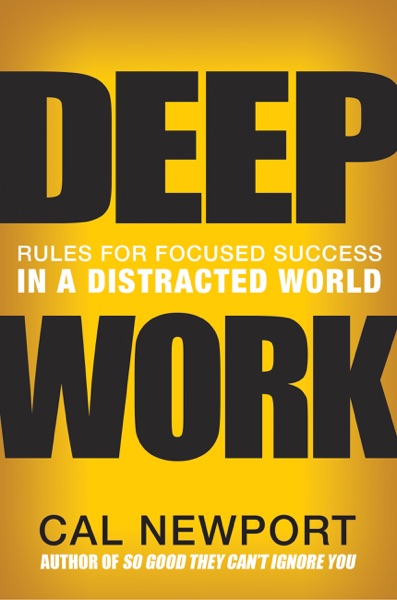
If you want to master intense focus and produce high-quality work in a distracted world, this book provides actionable strategies for concentration.
-
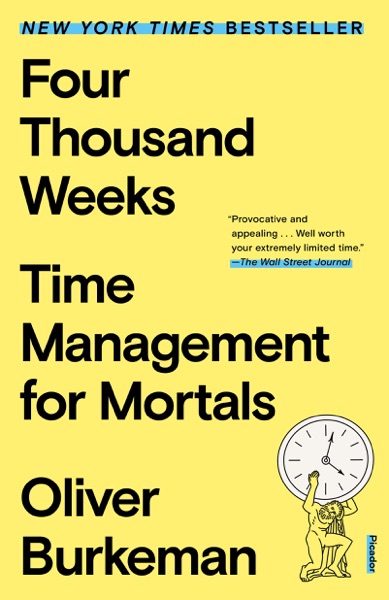
Offers a more philosophical and realistic approach to time management, accepting our limitations rather than trying to 'optimize' every minute.
Executive Synthesis & Monday Morning Action
Essentialism is not a time-management technique; it is a life philosophy.
By embracing trade-offs, applying the 90% Rule, mastering the graceful 'no', and removing bottlenecks, you eliminate the trivial noise and make your highest possible contribution to what truly matters.