Deep Work vs Make Time
Elite Cognitive Rigor vs. Practical Daily Energy Optimization
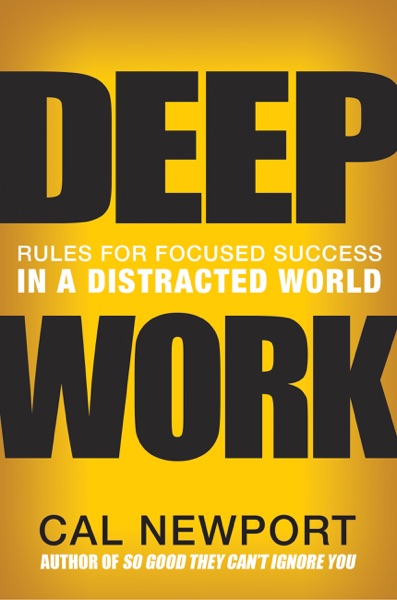
Deep Work: Rules for Focused Success in a Distracted World

Make Time: How to Focus on What Matters Every Day
The Battle of Ideas
Cal Newport’s Deep Work argues that the ability to perform distraction-free, high-intensity intellectual work is becoming both rare and extraordinarily valuable in the knowledge economy. Jake Knapp and John Zeratsky’s Make Time offers a joyful, pragmatic 4-step daily framework (Highlight, Laser, Energize, Reflect) created by former Google designers to reclaim time from addictive digital defaults.
How Their Methodologies Diverge
Deep Work takes a rigorous, philosophical approach to carving out multi-hour cognitive depth; Make Time focuses on finding 60-90 minutes daily for one key priority.
Newport advocates for extreme isolation strategies (monastic, bimodal, rhythmic); Knapp & Zeratsky focus on micro-experiments with smartphone apps, inbox defaults, and caffeine timing.
Deep Work treats focus as a high-stakes competitive advantage; Make Time treats attention as a tool for personal fulfillment and lower stress.
Comparative Breakdown
| Dimension | Deep Work | Make Time |
|---|---|---|
| Core Thesis | Uninterrupted focus is a superpower in the modern economy | Design your day around a single daily Highlight |
| Tone | Academic, disciplined, rigorous | Playful, iterative, design-sprint style |
| Time Commitment | Multi-hour structured deep work blocks | 60–90 minute daily focus block |
| Ideal User | Knowledge workers, academics, software engineers, writers | Busy professionals overwhelmed by daily meetings & screens |
Which One Should You Read First?
Use Make Time to stop the bleeding of distracted daily life, then use Deep Work to build world-class intellectual output.
Read Deep Work If:
Knowledge workers aiming to produce elite creative or technical work and command high market value.
Open Deep Work Masterbrief →Read Make Time If:
Anyone feeling exhausted by modern notifications, endless meetings, and smartphone addiction.
Open Make Time Masterbrief →Core Mental Shifts Inside Each Brief
Deep Work Key Shifts
8 ShiftsThe Deep Work Hypothesis
Deep work produces rare, irreplaceable value. Elite performance requires multiplying uninterrupted time by extreme intensity of focus.
The Danger of Attention Residue
Attention residue from task-switching cripples cognition for up to 25 minutes. Never alternate between deep thinking and inbox checking.
Choose Your Deep Work Philosophy
Select a deep work philosophy—Monastic, Bimodal, Rhythmic, or Journalistic—and anchor your routine around it.
The Grand Gesture & Environment Architecture
Use the Grand Gesture and strict environmental architecture to signal your brain that deep work is high-stakes and non-negotiable.
Make Time Key Shifts
8 ShiftsThe Two Traps: Busy Bandwagon & Infinity Pools
Break the two default traps: the Busy Bandwagon (reactive work) and Infinity Pools (endless content feeds). Redesign your own daily defaults.
Choose Your Daily Highlight
Choose one 60–90 minute Daily Highlight based on Urgency, Satisfaction, or Joy. Schedule it on your calendar before anything else.
Schedule Your Highlight & Build Firewalls
Block 60–90 minutes on your calendar for your Highlight. Defend it with firm boundaries as your most important appointment.
Laser Focus (Destroy the Distraction Phone)
Create a Distraction-Free Phone. Delete social apps, news, and email from your mobile device to eliminate frictionless temptation.
Common Questions Answered
Is Deep Work realistic for people in meeting-heavy corporate jobs?
Newport outlines four different deep work philosophies, including the "Rhythmic" and "Journalistic" approaches designed specifically for professionals who cannot isolate for months.
What is the core takeaway of Make Time?
Pick one "Highlight" each day that matters most to you, protect 60-90 minutes of laser focus for it, optimize your physical energy, and reflect daily.
Ready to master both books in 30 minutes?
Save hours of reading time with interactive mental shifts, practical quizzes, and executive frameworks.